

Chicago’s Dancers | 1893 World’s Fair Belly Dance History Painting | Dance Through Time Series
Chicago’s Dancers | 1893 World’s Fair Belly Dance History Painting | Dance Through Time Series
Couldn't load pickup availability
✓Free US Shipping
✓Handmade in Deep East Texas
✓ Ready-to-ship items ship within 1–3 business days
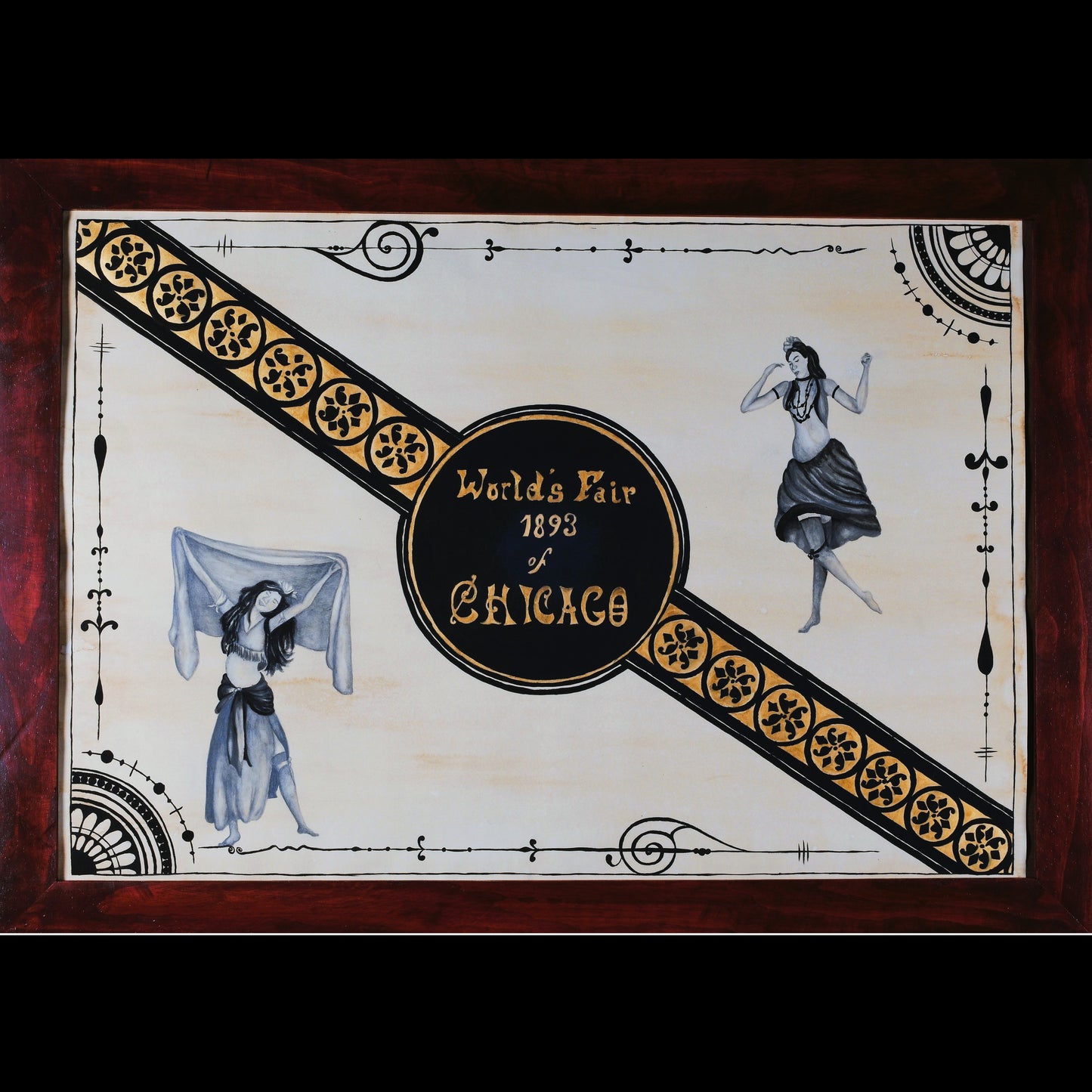
Chicago’s Dancers is a large-scale multimedia work from the Dance Through Time series, measuring 3 feet tall by 4 feet wide. It explores the complex and often overlooked history surrounding the 1893 Chicago World’s Fair and the “Streets of Cairo” exhibit—an event that significantly shaped how belly dance was introduced and perceived in the United States.
This piece focuses on the two performers historically referred to as “Little Egypt,” women whose presence at the fair sparked fascination, controversy, and lasting cultural impact. After the exposition, they were not returned to their home countries as promised, instead joining traveling performances and circuses. Their legacy became intertwined with the early evolution of belly dance in America, including its later connection to tent-based performances where dancers used structural poles for balance and movement around the stage.
The artwork itself is built as much from process as it is from history.
The entire surface is hand-aged using approximately 24 cups of brewed coffee, layered repeatedly to create a deeply antique, time-worn paper surface. This creates the feeling of an artifact rather than a contemporary illustration.
Black India ink linework forms an intricate Art Nouveau-inspired border system, referencing design language from the late 1800s. At the center sits the historically accurate typography reading:
“World’s Fair 1893 of Chicago”
Recreated from original fair banner lettering, it is enclosed in a perfect black circle, with the text carefully rendered in gold.
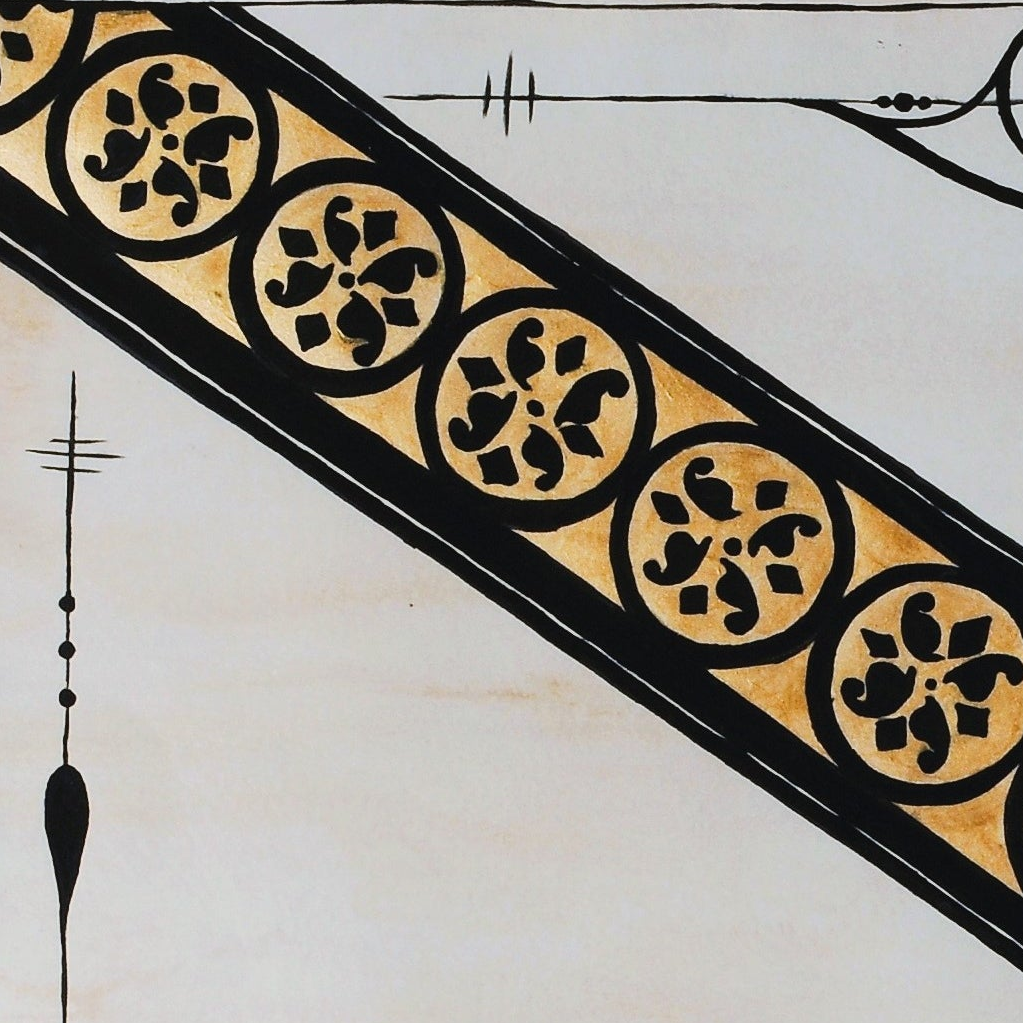
A diagonal golden sash crosses the composition from corner to corner, filled with repeating filigree inspired by historical advertising from the exhibit. The gold and black elements interlock visually, creating a structural rhythm that connects the entire page back to the central historical record.
In the lower left and upper right corners, the two “Little Egypt” performers are drawn in watersoluble graphite, allowing their figures to soften into a more atmospheric, photographic feel—referencing the surviving historical imagery of their performances.
This work merges fine art painting, historical research, typography, and graphic design into a single archival composition. Created in 2015–2016 for the original Dance Through Time exhibition, it represents one of the most research-intensive works in the series.
It is framed in a custom hand-built frame made specifically for this body of work.