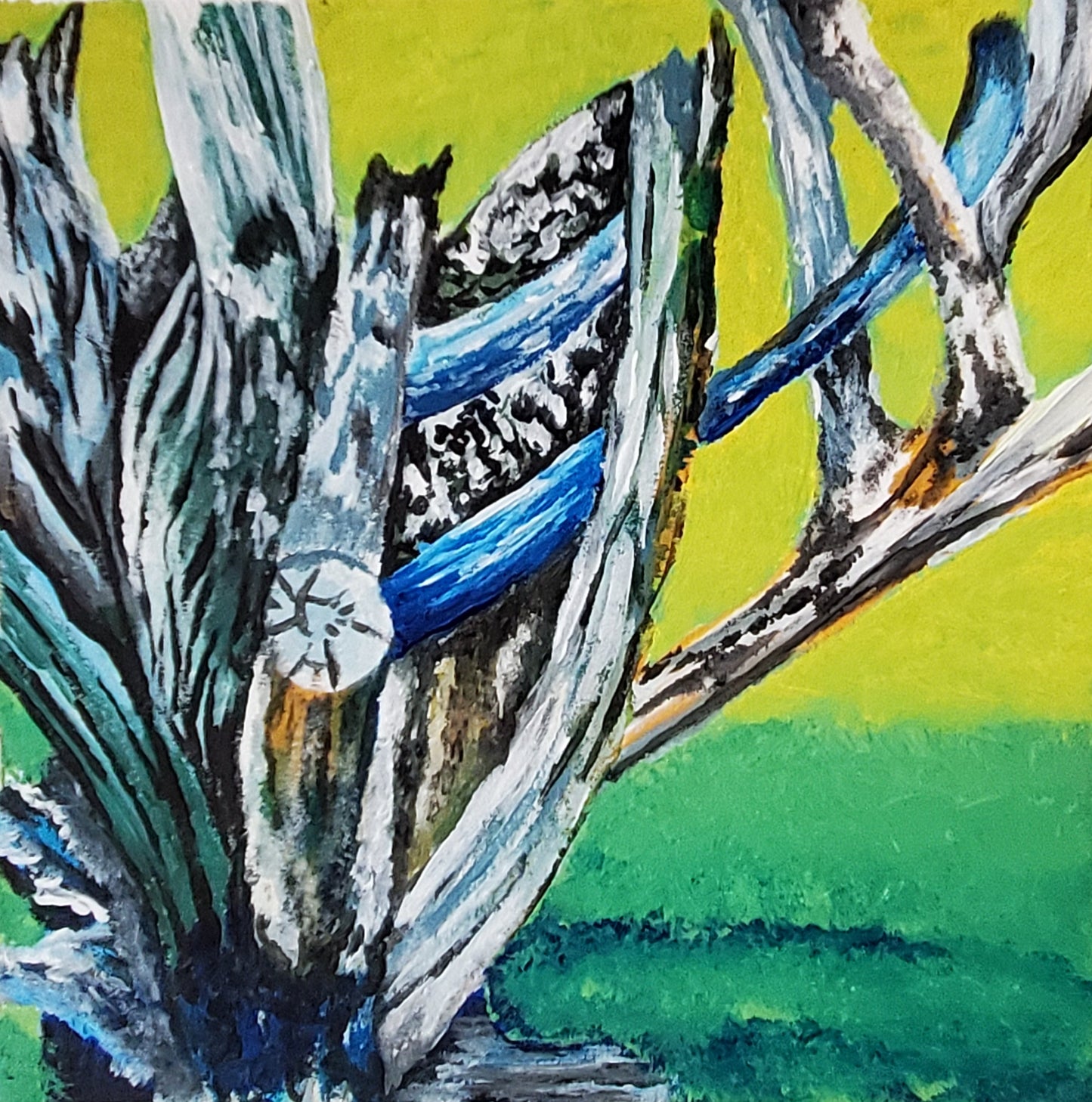

Colors That Make the Wind | Original Abstract Nature Painting (5 x 5)
Colors That Make the Wind | Original Abstract Nature Painting (5 x 5)
Couldn't load pickup availability
✓Free US Shipping
✓Handmade in Deep East Texas
✓ Ready-to-ship items ship within 1–3 business days
Colors That Make the Wind | Original Abstract Nature Painting (5 x 5)
Completed Original • One of a Kind • Acrylic on Paper • Ready to Ship
Colors That Make the Wind is an original acrylic painting by Amy Bridges inspired by a moment of unexpected discovery in nature.
The composition is drawn from the memory of finding the top of a tree that had been left behind after a storm. All of its larger branches had broken away or been removed, leaving only the crown where everything once connected.
What remained was not emptiness, but color—unexpected, layered, and alive.
Inspiration
This piece began with a real moment in nature.
After a storm at my father’s property, I came across the remaining top of a fallen tree. The structure had been stripped down to its core connection point, yet it held an extraordinary range of color I had never noticed in a single section of wood before.
It made me realize how much life and variation exists in places we often overlook.
I wanted to hold onto that moment visually—the idea that even something broken back to its simplest structure can still carry complexity, vibrancy, and presence.
Colors That Make the Wind became my attempt to preserve that experience.
Composition
The painting focuses on layered color fields inspired by the visual memory of the exposed tree crown.
Rather than depicting the tree literally, the work translates the sensation of standing in front of it—where movement, atmosphere, and color feel inseparable.
The result is an abstracted study of natural force, texture, and chromatic depth, built within a small, concentrated format.
Medium
- Acrylic on paper
Artwork Details
- Original acrylic painting
- Canvas size: 5 x 5 inches
- Acrylic on paper
- Unframed
- One of a kind
- Signed original artwork
About This Work
Colors That Make the Wind is a reflection on how nature holds unexpected richness even in moments of disruption.
It invites the viewer to consider how much color, detail, and presence exists in the overlooked or reduced parts of the natural world—where structure has changed, but life is still visible.